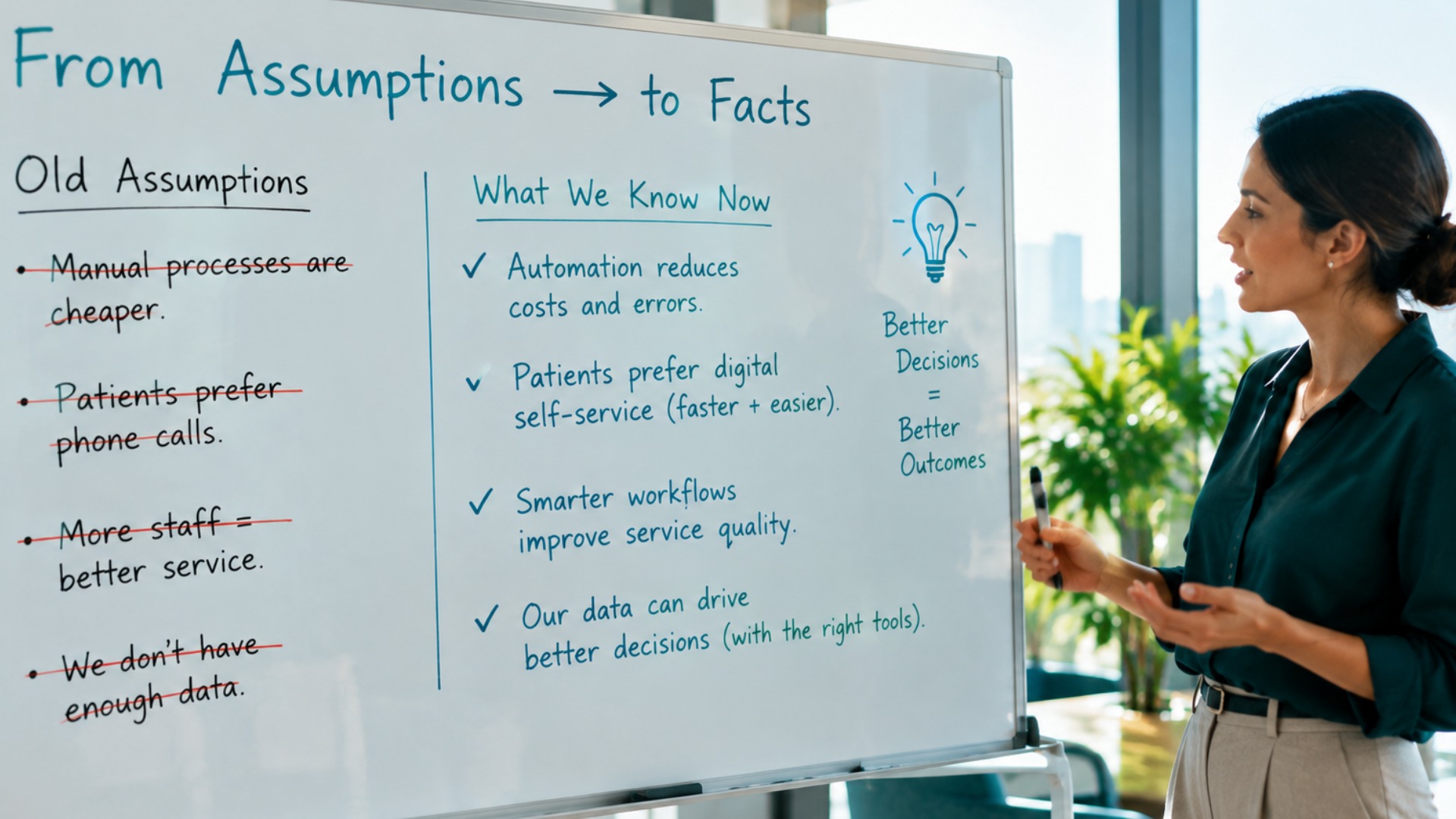
AI automation has been discussed widely enough that certain assumptions have calcified into conventional wisdom, even when they don't hold up. A few of these myths keep showing up in how businesses evaluate whether and how to adopt automation.
Myth 1: AI Automation Replaces Entire Teams
The most persistent myth is that automation eliminates jobs wholesale. In practice, the systems that work best absorb repetitive, high-volume tasks while leaving judgment calls, exceptions, and anything requiring real context to a person. Most successful deployments shift what people spend time on rather than removing them from the process.
Myth 2: More Advanced AI Is Always Better
There's a common assumption that choosing the most sophisticated AI tool available produces the best result. Often, a task that's genuinely repetitive and rule-based is solved faster and more reliably with simple automation than with AI, which introduces complexity and cost a straightforward task never needed in the first place.
Myth 3: AI Automation Works Right Out of the Box
Automation is frequently sold as plug-and-play, but the systems that actually deliver results need a defined workflow, clear success metrics, and ongoing oversight from day one. Projects that skip this setup tend to stall in extended pilots without ever reaching something reliable enough to depend on.
Myth 4: AI Makes Decisions Without Bias or Error
AI systems are often assumed to be more objective than human decision-making, but they reflect the patterns in the data they were trained on, including any gaps or skew in that data. Treating AI output as automatically correct, without human review of flagged or unusual cases, is how errors go unnoticed rather than caught.
Myth 5: Once Automated, a Process Runs Itself Forever
Automation isn't a one-time setup that keeps working indefinitely without attention. Processes change, inputs shift, and edge cases emerge over time, which means a system needs periodic review to stay accurate, not a single configuration that's left untouched after launch.
Why These Myths Persist
Most of these misconceptions come from treating AI automation as a finished product rather than an ongoing system that needs the right scope, oversight, and expectations from the start, a theme that shows up across nearly every automation project that succeeds versus one that stalls.
What This Means in Practice
Businesses that get real value from automation tend to approach it with fewer assumptions and more specific questions, what task, what metric, what oversight, rather than treating AI as a general-purpose fix for any operational problem.