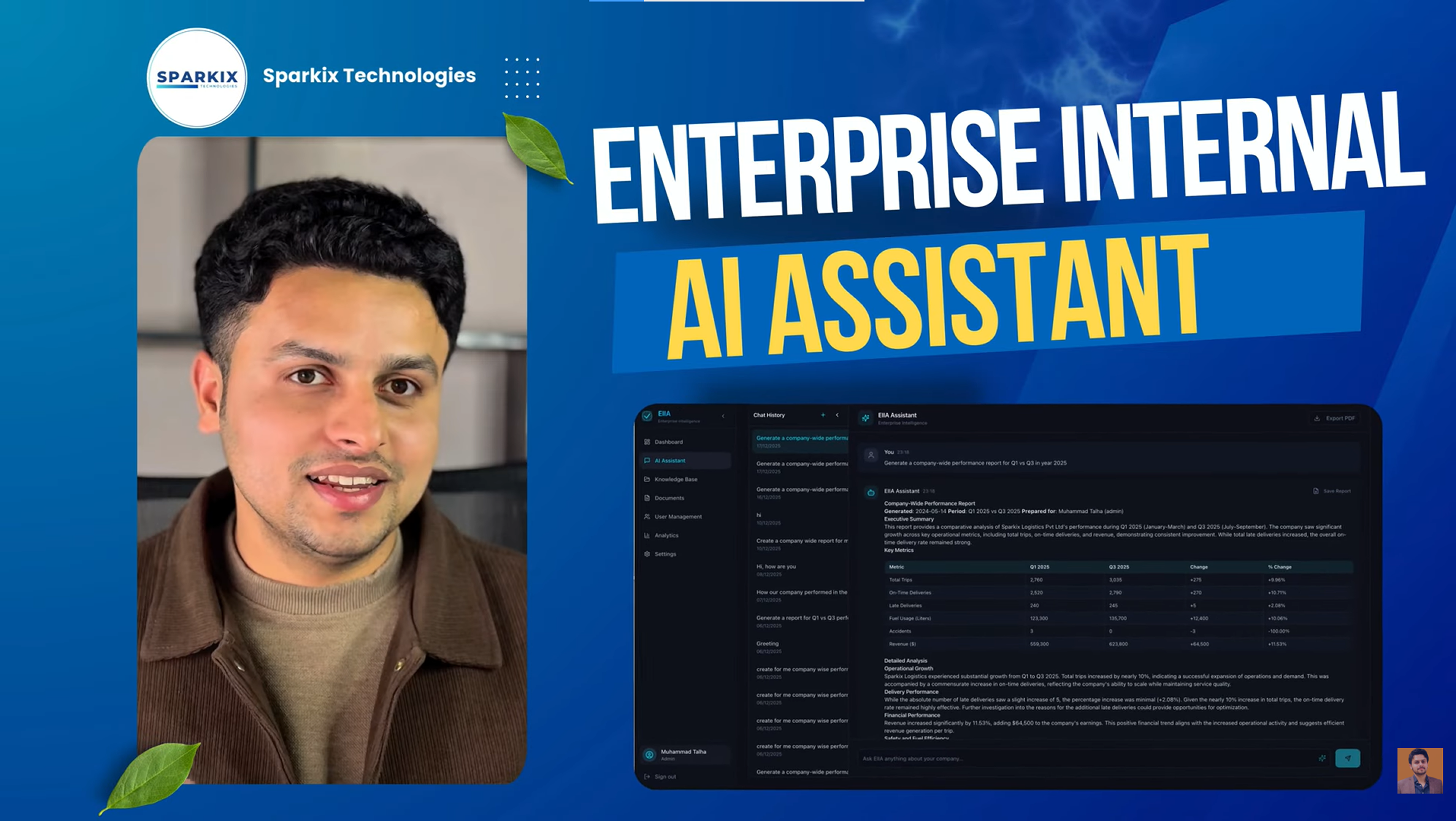
Introduction
Artificial intelligence in enterprise software is moving beyond simple automation and predictive analytics. A new paradigm known as Agentic AI is redefining how enterprises operate by enabling autonomous AI agents that can plan, act, and adapt with minimal human intervention.
As enterprises scale their digital transformation efforts, Agentic AI is becoming a foundational technology for modern enterprise platforms.
What Is Agentic AI
Agentic AI refers to AI systems designed to act independently toward defined goals. Unlike traditional AI models that respond to isolated prompts, agentic systems maintain context, reason over multiple steps, and execute tasks across interconnected enterprise systems.
These agents can monitor workflows, make decisions, and trigger actions without constant human oversight.
Why Enterprises Are Adopting Autonomous AI Agents
Enterprises face increasing operational complexity, data overload, and rising customer expectations. Autonomous AI agents help organizations manage this complexity by handling repetitive tasks, coordinating workflows, and optimizing processes in real time.
By reducing manual effort, enterprises can redirect human talent toward higher-value strategic initiatives.
Key Benefits of Agentic AI for Enterprise Software
Agentic AI delivers measurable value across enterprise environments.
It improves operational efficiency by automating end-to-end workflows rather than isolated tasks. It enhances decision-making through continuous analysis of real-time data. Autonomous agents also reduce errors by maintaining consistency across processes and systems.
These benefits make Agentic AI especially valuable for large-scale, distributed enterprises.
Enterprise Use Cases of Autonomous AI Agents
Agentic AI is already being deployed across multiple enterprise functions.
In IT operations, AI agents monitor system health, detect anomalies, and initiate remediation actions. In customer service, autonomous agents manage tickets, prioritize issues, and coordinate resolutions. In finance and operations, AI agents automate reporting, compliance checks, and forecasting workflows.
These use cases demonstrate how agentic systems extend beyond traditional automation tools.
Agentic AI vs Traditional Automation
Traditional automation relies on predefined rules and static workflows. Agentic AI introduces adaptability, allowing agents to respond dynamically to changing conditions.
Autonomous agents learn from outcomes, refine their strategies, and improve over time. This makes them more resilient and scalable for enterprise-grade applications.
Security and Governance in Agentic AI Systems
Enterprise adoption of Agentic AI requires strong governance frameworks. Organizations must ensure transparency, auditability, and secure access to data and systems.
Modern enterprise AI platforms are integrating governance layers that allow autonomous agents to operate safely while aligning with compliance and regulatory requirements.
The Future of Enterprise AI Systems
Agentic AI represents a significant step toward self-managing enterprise software. As these systems evolve, AI agents will function as intelligent collaborators, supporting teams and executing complex tasks autonomously.
Enterprises that invest early in Agentic AI will be better positioned to innovate, scale, and compete in an increasingly AI-driven economy.
Conclusion
Agentic AI is reshaping enterprise software by introducing autonomous intelligence at scale. By enabling AI agents that can act, adapt, and optimize workflows independently, enterprises unlock new levels of efficiency and resilience.
For organizations looking to future-proof their technology stack, Agentic AI is a critical investment.