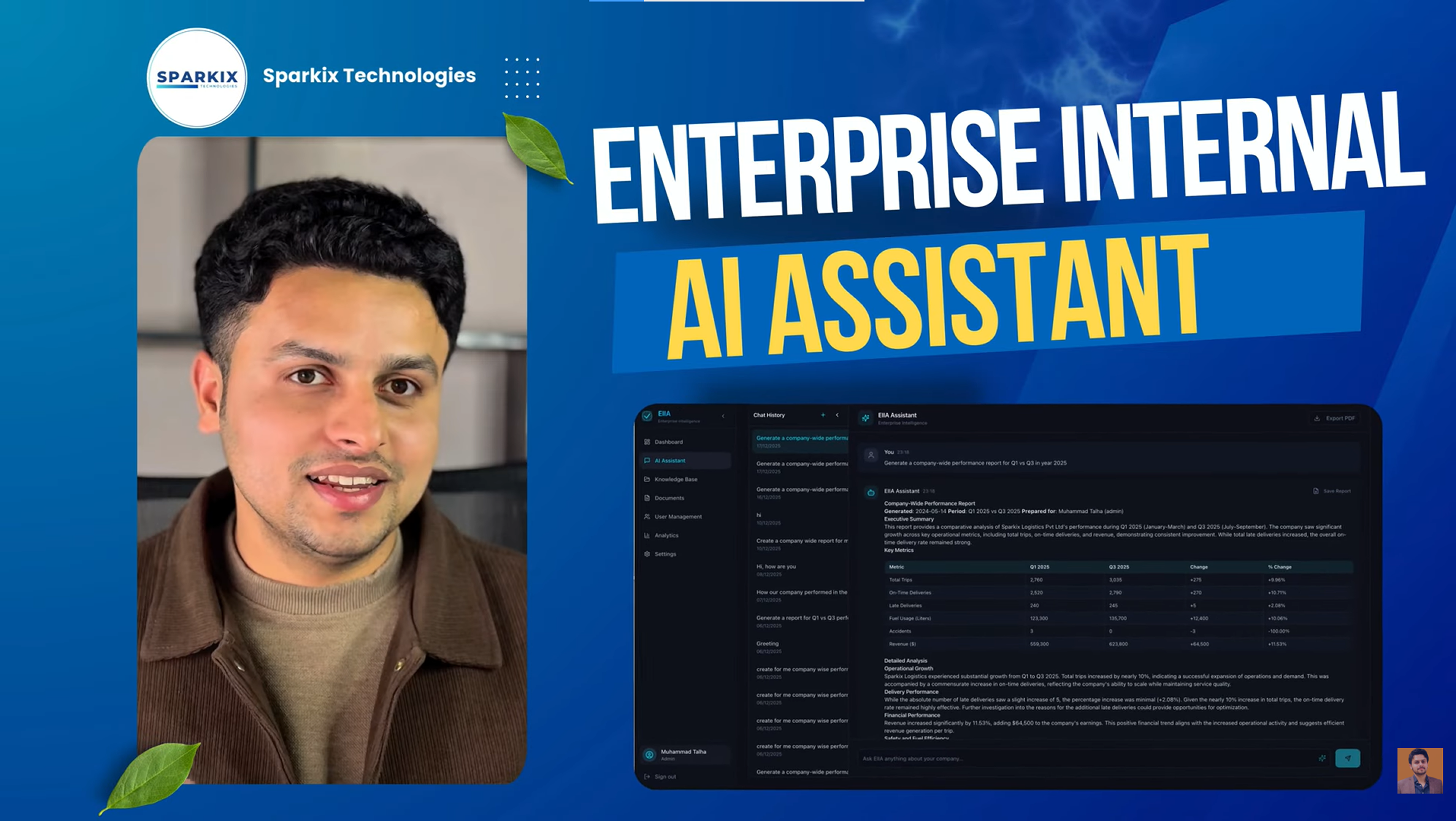
For the past two years, AI automation largely meant chatbots and generic copilots layered on top of existing software. In 2026, the gap between that marketing pitch and what businesses actually run in production has become the more interesting story, and a clearer picture of real adoption is starting to emerge.
1. Agentic Automation Is Moving From Pilot to Production
Agentic AI, systems that can retrieve information, call tools, and complete multi-step tasks with minimal supervision, has moved past the experimental stage for a growing number of enterprises. The pattern among companies actually seeing results isn't deploying an autonomous agent across the whole business, it's picking one process with clear inputs, clear outputs, and a human checkpoint, and automating that end-to-end before touching anything else.
2. Governance Is Becoming Operational, Not Just Written Policy
Most enterprises already have some form of AI governance framework on paper, but few have fully put it into practice. That's changing quickly as AI-driven decision-making becomes embedded in daily operations, which means audit trails, permission boundaries, and oversight are shifting from compliance documents into actual technical controls.
3. Automation Is Expanding Into Finance, Compliance, and Operations
The first wave of enterprise AI agents mostly lived in customer-facing chat. The current wave is moving into less visible but higher-value areas, finance, compliance, and back-office operations, the processes that actually move a company's bottom line rather than just handle customer questions.
4. AI Is Being Built Into Core Systems, Not Bolted On
Rather than treating AI as a standalone layer, businesses are increasingly connecting it directly into the systems that already run their operations, ERPs, data platforms, and existing workflows. Treating agentic AI as separate from these systems tends to limit its impact, since the real value comes from insight, decision, and execution operating as one connected system rather than three disconnected tools.
5. ROI Is Being Measured Before Scaling Further
Enterprises seeing genuine returns share a common approach: start with a narrow, well-defined workflow, prove the ROI with real numbers, and only then expand automation into adjacent processes. Companies skipping that step and automating broadly from the start are the ones most often stuck in extended pilots without much to show for them.
What This Means Going Into the Rest of 2026
None of these trends suggest AI automation is slowing down, they suggest it's maturing. The businesses pulling ahead aren't necessarily using more advanced technology than everyone else, they're simply more disciplined about where they apply it and how carefully they measure whether it's actually working.